Congratulations! You've made the decision.
Whether you've hired a kilt so many times you could have bought one by now, you're getting married, celebrating a special occasion, or you've simply decided it's time to own one, buying your first kilt is a milestone.
Unlike most clothes, a well-made kilt isn't something you'll replace every few years. If it's made properly, it'll last decades, fit beautifully and may even be passed on to the next generation.
But once you've decided to buy one, the questions begin...
- What tartan should I wear?
- Where should I buy it?
- Hand sewn or machine sewn?
- Heavyweight or mediumweight?
- Do I really need eight yards?
Let's answer them.
Choosing Your Tartan
For many people, this is the hardest part.
There are over 10,000 registered tartans, although only a fraction are woven regularly. Fortunately, narrowing down your options is easier than you might think.
Many people choose their family or clan tartan. Depending on your surname, you may have several versions available, from ancient and modern to hunting or dress variations.
If your surname doesn't have its own tartan, don't panic.
Many families are septs, meaning they were historically associated with a larger clan and are perfectly entitled to wear that clan's tartan. You could also choose a district tartan representing where you or your ancestors came from.
Or—and this is our favourite option—you can simply choose one you love.
Despite what you may have heard, there is no "tartan police". Most clans are delighted to see people appreciating and wearing their tartan.
Wear what feels right to you.
Where Should You Buy Your Kilt?
If you're visiting Scotland, your first thought might be Edinburgh's Royal Mile.
It's certainly an experience, but it's also full of souvenir shops, tourist crowds and products of wildly varying quality.
Instead, look for retailers who can explain exactly what they're selling and, ideally, who actually work with traditional kiltmakers.
The best shops will happily answer every question you have and won't rush you into making a decision.
Hand Sewn or Machine Sewn?
This is probably the biggest decision you'll make.
A traditional hand-sewn kilt is made specifically for you. Every pleat is individually calculated to suit both your measurements and the tartan you're wearing. The shaping through the hips and small of the back creates a garment that fits almost like tailoring rather than simply wrapping around your waist.
Making one takes between 16 and 20 hours, and every stitch is there for a reason.
A machine-sewn kilt is generally made using standard patterns and production methods. There's absolutely nothing wrong with a well-made machine-sewn kilt, particularly if you're working to a budget, but it isn't the same garment.
One piece of advice: ask exactly what you're buying.
Terms such as hand finished or hand tailored don't necessarily mean the kilt has been traditionally hand sewn.
If you're paying for craftsmanship, make sure you're getting craftsmanship.
Heavyweight or Mediumweight?
This question comes up all the time.
Heavyweight cloth has long been regarded as the traditional choice. It hangs beautifully, wears exceptionally well and feels wonderfully substantial.
But that doesn't automatically make it the best option.
For most people, a mediumweight tartan performs just as well. It drapes beautifully, is more comfortable to wear and is ideal if you'll mainly be wearing your kilt for weddings, formal events or occasional Highland games.
Generally speaking:
- Mediumweight suits most wearers.
- Heavyweight can be an excellent choice for frequent wear or larger builds.
- Some tartans are only woven in one weight, so your choice may already be made for you.
One thing we don't generally recommend is lightweight tartan for a traditional kilt. Although it sounds ideal for warmer climates, lighter cloth tends to crease more easily and cling rather than swing.
Eight Yards?
Yes.
Stick with eight yards.
Occasionally someone may suggest seven yards if you're particularly slim, but people change over the years (speaking from experience!).
An eight-yard kilt gives your kiltmaker more flexibility for future alterations while maintaining the full depth of pleats that gives a traditional kilt its distinctive look.
The only time we'd usually consider nine yards is for larger waist sizes where extra cloth allows the pleats to remain properly proportioned.
Buying Online? Absolutely.
Twenty-five years ago, many people believed kilts simply couldn't be sold online.
Thankfully, times have changed.
Today, many traditional kiltmakers work directly with customers all over the world. A good online retailer will provide detailed measuring instructions, talk you through the process and contact you if anything looks unusual.
In many ways, buying online gives you something even better than a quick visit to a shop—you can deal directly with the people who will actually be making your kilt.
Find a Kiltmaker, Not Just a Shop
Traditional kiltmaking is still very much alive.
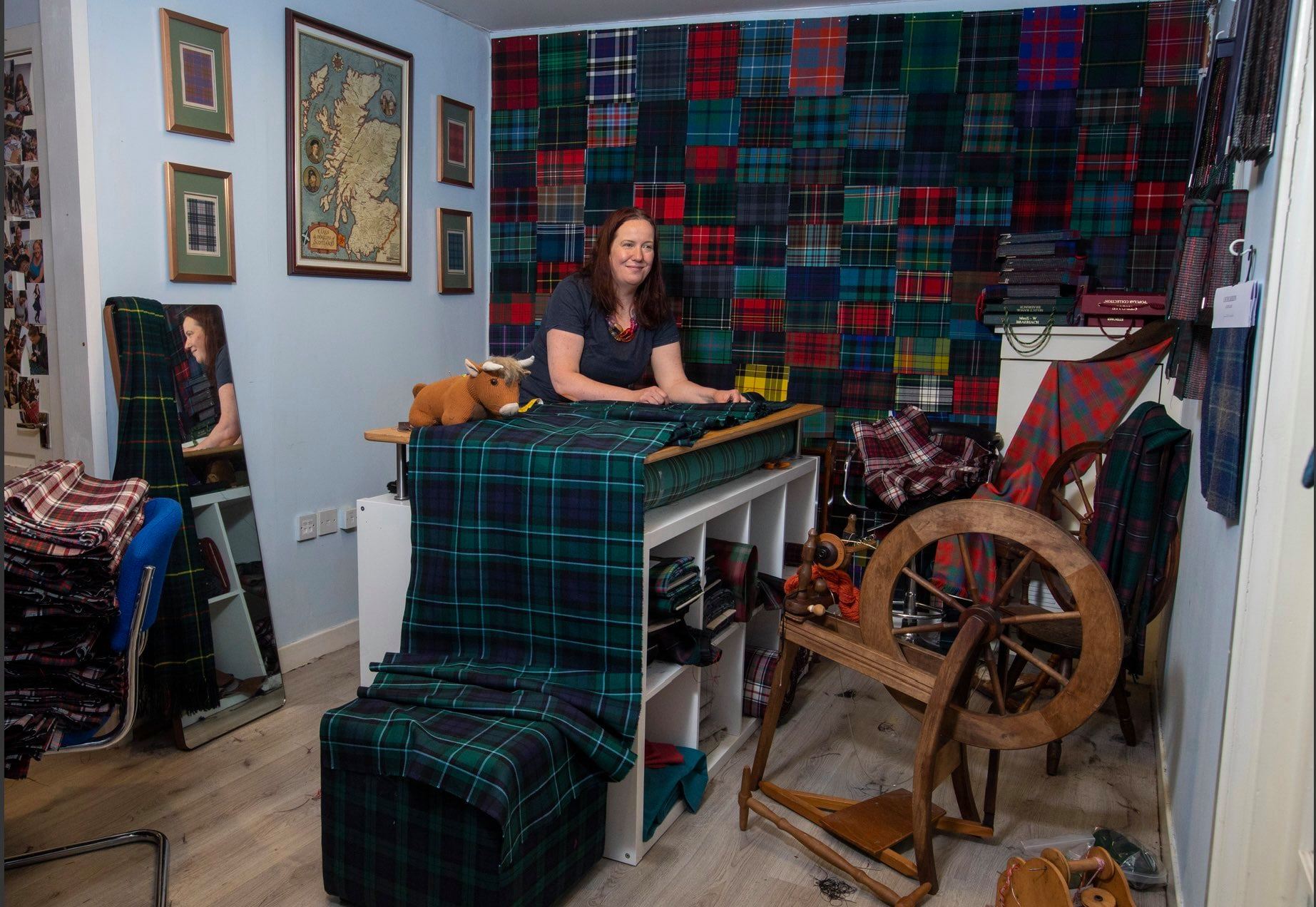
At ScotClans, every traditional hand-sewn kilt is made by trained kiltmakers who genuinely care about the craft. You're not simply buying a garment; you're investing in generations of knowledge and skill.
We're also proud to have founded The Kiltmakery, a community where traditionally trained kiltmakers can share techniques, support one another and help preserve the craft for future generations.
The Final Word
Buying your first kilt should be exciting, not intimidating.
Take your time, ask questions and choose a kiltmaker you trust. A well-made kilt isn't just another item of clothing—it's something you'll wear for years, celebrate life's biggest moments in and perhaps one day hand on to someone else.
And if you're still unsure?
Give us a call.
We're always happy to talk kilts.