When most people think of the kilt, they picture Highland pride, military tradition and fearless Scottish soldiers marching into battle. For centuries, Highland regiments earned a formidable reputation while wearing the kilt, but this iconic garment also had a much darker side. Fighting wars in a traditional woollen kilt was far from glamorous.
The Boer War
During the Second Boer War (1899–1902), Highland soldiers found themselves fighting in the harsh South African landscape. Instead of heather-covered hills, they faced thorny scrubland, intense heat and a relentless African sun.
The thorn bushes tore at their bare legs, leaving cuts and scratches that could quickly become infected. You might think Highlanders would have been used to rough terrain back home in Scotland, but Scotland's climate is a world away from South Africa. Fair-skinned Scottish soldiers, already wounded by thorns, were also exposed to severe sunburn while spending hours under enemy fire.
One inventive officer, Lieutenant Bertrand of the Argyll and Sutherland Highlanders, came up with an unusual solution. He reportedly wore women's stockings beneath his kilt while on campaign to protect his legs. Practical? Absolutely. Fashionable? We'll leave you to decide!
Life in the Trenches
If the Boer War was uncomfortable, the First World War was something else entirely.
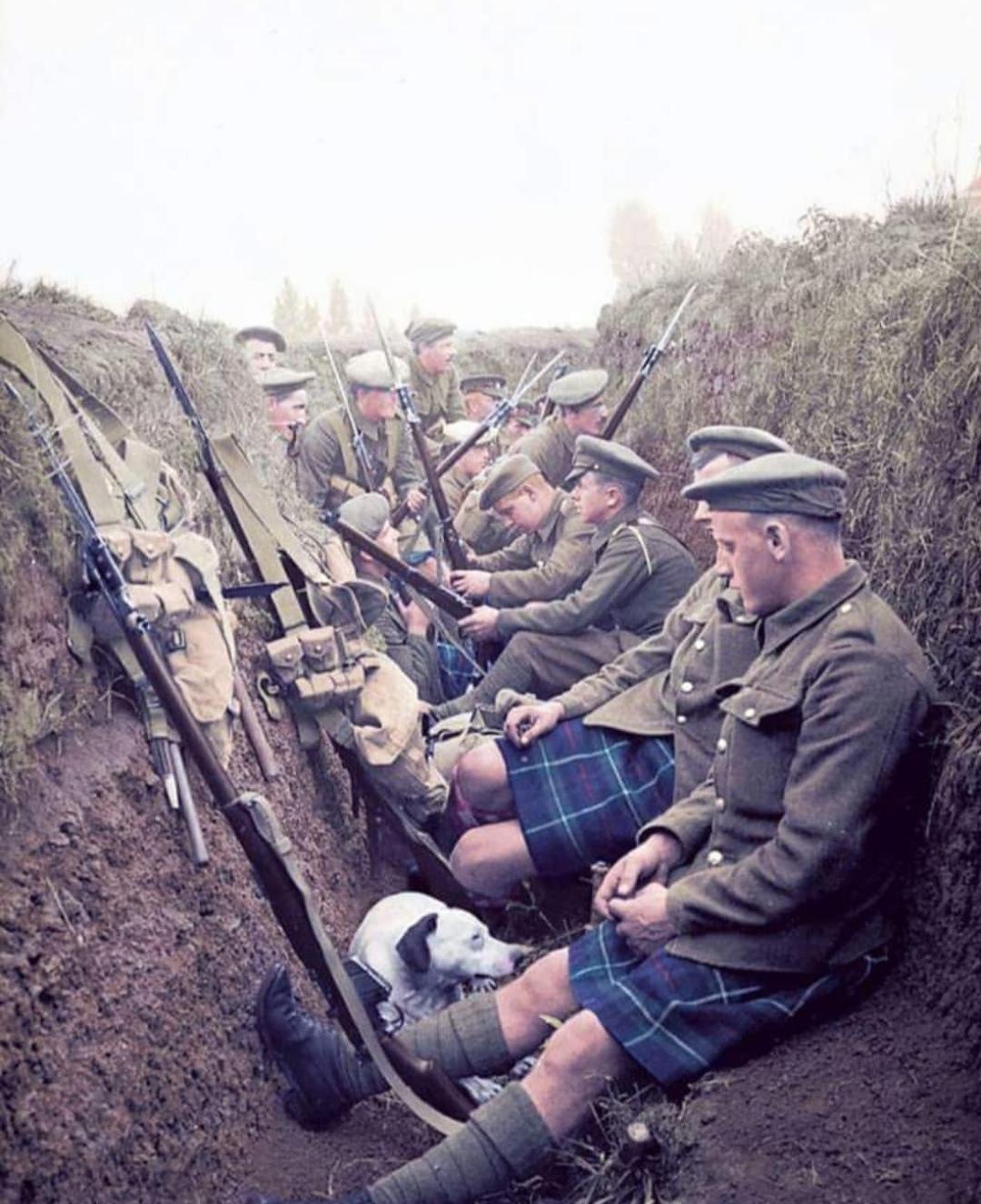
Highland soldiers could spend weeks living in trenches filled with mud and filthy water, sometimes standing waist-deep in it. Their kilts were constantly soaked, becoming heavy, stiff and abrasive. As the wet wool rubbed against the backs of their knees and thighs, it could wear through the skin, causing painful sores.
The kilt also provided an ideal home for lice and other unwelcome creatures, making life even more miserable. Every trip over the top meant scrambling across barbed wire, broken timber and shell holes with bare legs exposed. Even the smallest cuts could quickly become infected in the appalling conditions of the Western Front.
Despite these hardships, many Highland soldiers refused to give up the kilt. It had become far more than a uniform—it was a symbol of identity, pride and tradition.
The Pink Underwear Experiment
The British Army had long recognised that kilts left soldiers vulnerable, particularly to chemical weapons.
According to declassified records, between the 1920s and the outbreak of the Second World War, volunteer Scottish soldiers took part in experiments at Porton Down in Wiltshire. Wearing long stockings and woollen bloomers treated with chemicals designed to neutralise mustard gas, they were exposed to controlled amounts of the gas to test the effectiveness of the protective clothing.
Porton Down historian Gordon Carter explained:
"A great deal of attention was paid in those days to the impregnation of battledress and socks with substances called impregnities... These were chemicals which could actually combine with mustard gas vapours to render them harmless."
The trials were successful, and the first issue of protective underwear was sent to the Argyll and Sutherland Highlanders.
There was just one problem.
The underwear was pink.
Not only that, but it looked unmistakably like women's bloomers. Unsurprisingly, the Argylls' response to the War Office was brief and less than enthusiastic.
Whether the colour or the cost was the deciding factor, the experiment was quietly abandoned.
The End of the Kilt in Battle
By 1939, military technology had changed dramatically. Modern warfare demanded practical uniforms that offered greater protection, and the decision was made to withdraw the kilt from active service.
The Queen's Own Cameron Highlanders are generally recognised as the last Highland regiment to wear the kilt on active operations during the early stages of the Second World War before the new regulations came fully into effect.
That wasn't quite the end of the story, however. A handful of determined officers, pipers and traditionalists continued to wear the kilt whenever they could. One enduring story tells of Highland troops taking part in the famous St Nazaire Raid in March 1942 being granted special permission to wear their kilts. Whether it made them more aggressive or simply boosted morale, we'll never know—but it's a tale that perfectly captures the stubborn pride of the Highland soldier.
A Tradition That Lives On
Although the kilt disappeared from the battlefield, it never disappeared from military life.
Today, Highland regiments continue to wear the kilt on ceremonial occasions, proudly maintaining a tradition that stretches back centuries. Many also retain a piece of their regimental tartan in the diced band or bonnet as a reminder of their Highland heritage.
The kilt may no longer be practical for modern warfare, but its place in military history—and in Scotland's story—is as strong as ever.