The Kiltmakery is proud to have been commissioned to create hand-sewn kilts and other tartan pieces for NATO’s Multinational Corps Northeast (MNCNE), using a specially designed tartan that celebrates the Corps, its history and the nations that stand together within it.
Based in Szczecin, Poland, Multinational Corps Northeast is a high-readiness NATO headquarters with an important role on the Alliance’s northeastern flank.
The new tartan was created to commemorate the 25th anniversary of Multinational Corps Northeast in 2024, marking a quarter of a century of cooperation, commitment and shared purpose.
A Tartan with a Story to Tell

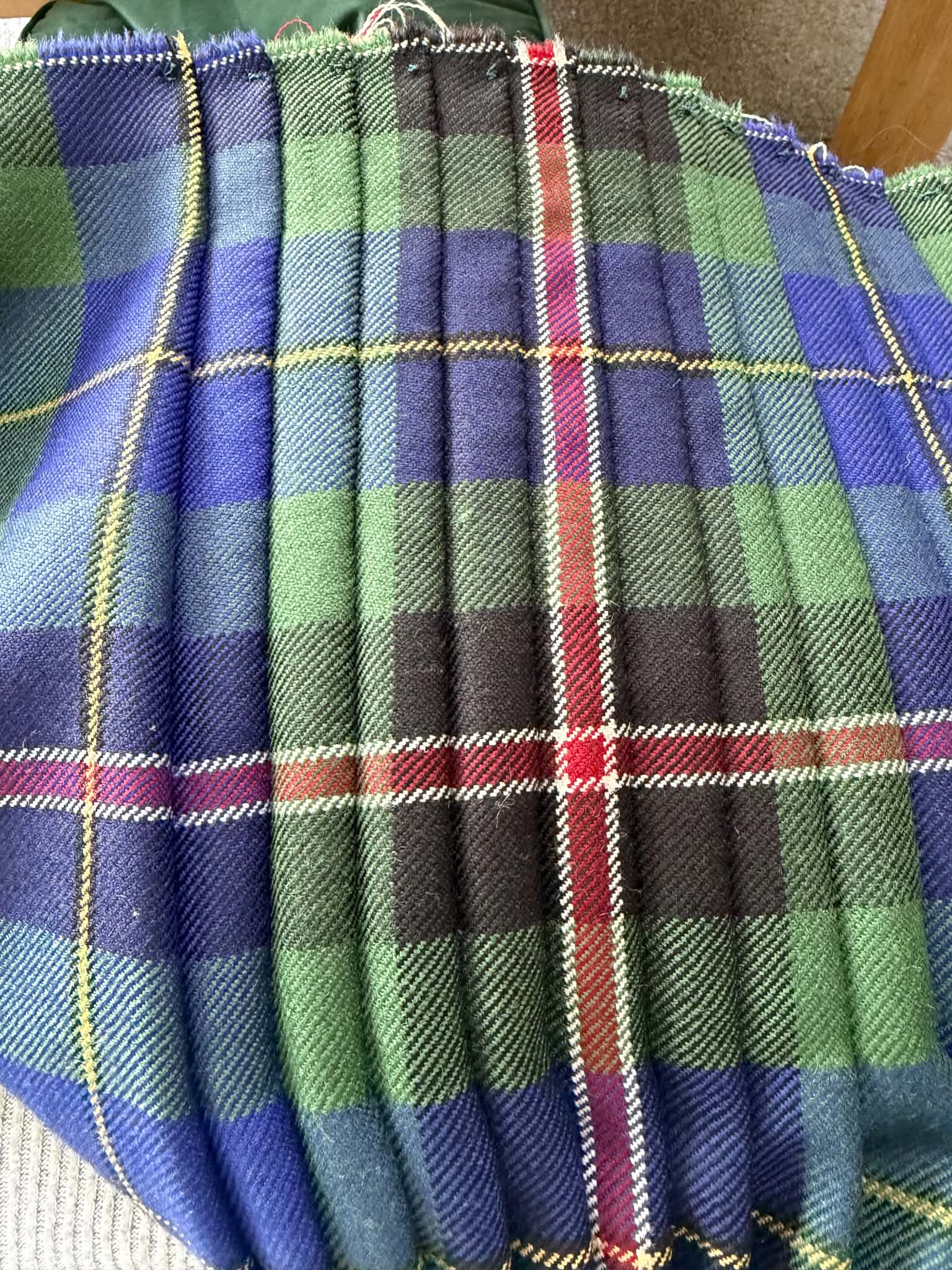
The tartan arrives
Like so many of Scotland’s most meaningful tartans, the Multinational Corps Northeast tartan is much more than a pattern. Its colours have been carefully chosen to tell a story.
The design incorporates colours representing the Corps’ three framework nations – Poland, Germany and Denmark – bringing their individual identities together within a single cloth.
At its foundation is a palette of dark greens, blues and blacks, giving the cloth the character of a traditional Scottish hunting tartan.
This was a deliberate choice.
Historically, hunting tartans tend to use more muted colours associated with the landscape. In the MNCNE tartan, that aesthetic takes on a contemporary meaning, reflecting the Corps’ role as a Regional Response Corps and acknowledging its land-based tactical role within NATO.
The result is a tartan that manages to feel distinctly traditional while representing a thoroughly modern multinational organisation.
From a New Tartan to a Traditional Kilt
For us at The Kiltmakery, there is something particularly special about working with a newly created tartan.
A tartan begins with an idea – colours, threads and a carefully considered sett – but it truly comes to life when that cloth is cut, shaped, pleated and stitched into something that will be worn.
The Kiltmakery has been entrusted with transforming the MNCNE tartan into traditional hand-sewn kilts, alongside other specially made tartan pieces.
Our kilts are created using traditional kiltmaking skills, with the pleats formed and stitched by hand. It is a slow and highly skilled process, but one that connects this very modern NATO tartan with generations of Scottish craftsmanship.
Tartan and Military Tradition
The connection between tartan and military service stretches back centuries.
Scottish Highland regiments helped establish some of the most recognisable military tartans, perhaps most famously the dark Government tartan associated with the Black Watch.
Today, tartan continues to be used by military organisations, regiments and international groups to represent identity, service and belonging.
Modern NATO-related tartans are an interesting continuation of that tradition. Rather than representing a single Scottish clan or regiment, they can bring together colours and symbolism representing different nations, organisations and shared histories.
The NATO Industry Advisory Group tartan, for example, incorporates symbolism within its threadcount: 32 threads represent NATO's 32 member states, while 68 threads reference the group's founding in 1968.
The NATO Intelligence Fusion Centre also has its own registered tartan, demonstrating how this distinctly Scottish form of visual identity has found a place within modern international organisations.
Where Scottish Tradition Meets International Cooperation
There is something wonderfully fitting about tartan being used in this way.
For centuries, tartan has helped communicate identity and belonging. Although its meaning and use have evolved enormously over time, it remains a powerful way of representing the connections between people.
The Multinational Corps Northeast tartan continues that tradition, bringing together the colours of Poland, Germany and Denmark in a cloth designed to commemorate 25 years of cooperation within NATO.
For The Kiltmakery, it is a privilege to take that cloth and turn it into something that can be worn and passed on.

The Flagging Ceremony of the 1st Lithuanian Division as it comes under MNC NE command